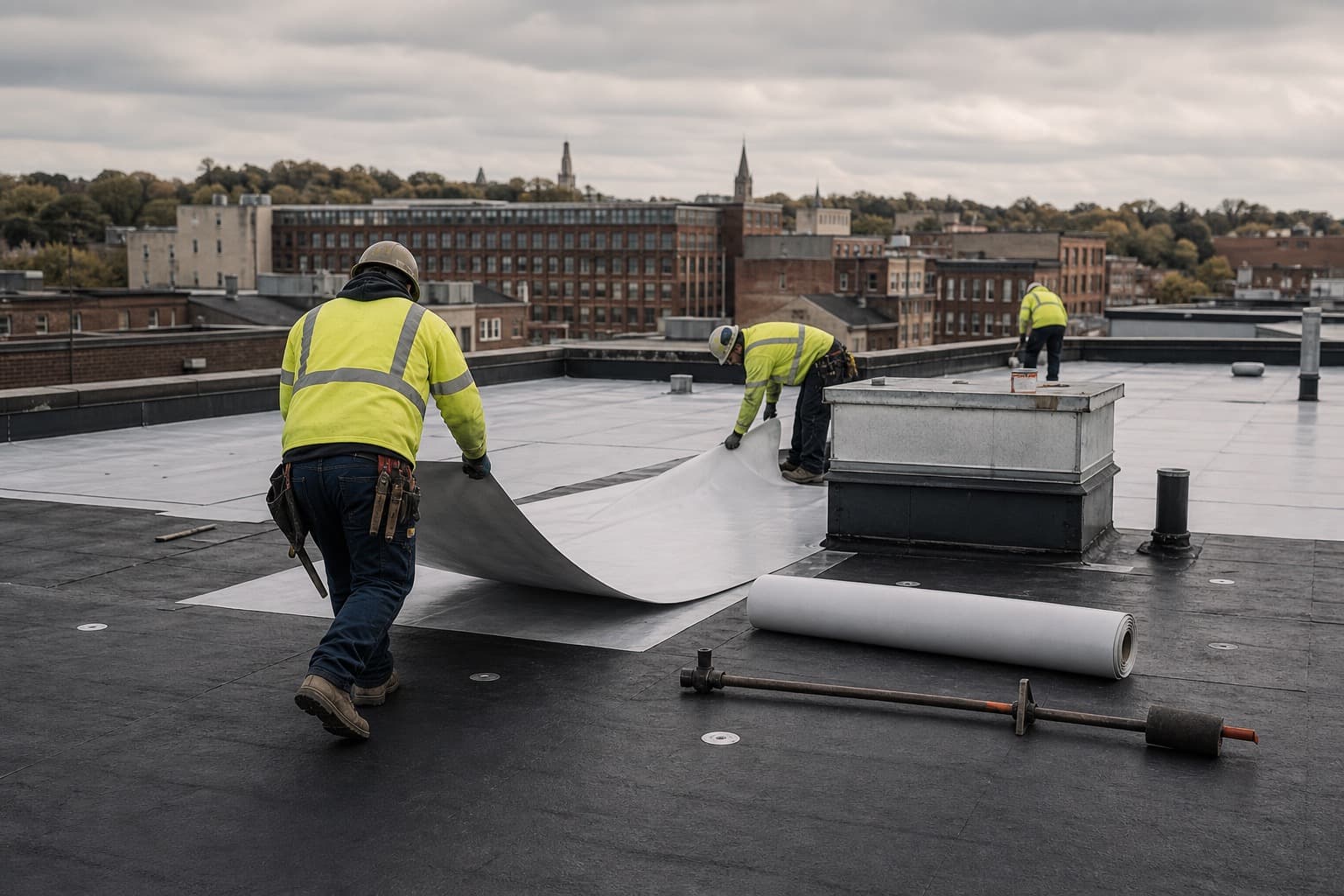
A new roof, built right, only when the numbers justify it.
When a flat roof reaches the end of its life, a full tear-off and re-roof rebuilds it as a warrantied system on a clean deck. It's the biggest decision your roof will face — so we don't recommend it until a repair or recover has genuinely run out of road.
Request a Roof WalkReplacement earns its place — it isn’t the default.
A tear-off is the right call in a specific set of conditions. If your roof isn’t in one of them, we’ll say so and point you to a repair or a recover instead.
The roof is genuinely at end of life
Widespread saturation, failed seams across the field, or a membrane that has simply run out of service life — the kind of condition a patch only chases.
A recover no longer qualifies
Too much trapped moisture in the assembly, or a second membrane already layered on. When the deck can't carry a recover, tear-off is the honest path.
You want the warranty clock reset
A new manufacturer-backed system starts a fresh warranty term against a clean deck — the strongest long-term position for a building you plan to hold.
Down to the deck, back up as a system.
A re-roof is a full assembly, not just a new top layer. Every scope is written to the roof in front of us, but a typical tear-off covers the following.
- Full tear-off of the existing membrane and wet insulation down to a sound deck
- Deck inspection and repair of any decking failures the tear-off exposes
- New insulation and cover board built to the target R-value and slope
- A new single-ply or multi-ply system installed to manufacturer specification
- All flashings, drains, edge metal, and penetrations detailed and sealed
- Photo documentation before, during, and after — filed as your closeout report
The system that fits the building.
For most tear-offs we build in TPO or EPDM — the two single-ply systems that fit the widest range of New England commercial roofs. Which one is right comes out of the roof walk, not a preference of ours.
Your building keeps running while we work.
A tear-off is the most disruptive service we run — so we plan it to protect what happens under the roof. We stage the work in sections, keep exposed areas dry-in ready against weather, and schedule around your operating hours where the building is occupied. Deliveries, crane time, and debris removal are coordinated so your tenants, customers, and staff keep moving through their day.
Two layers of protection.
Every roof we install carries two layers of coverage: a manufacturer-backed system warranty, and our own workmanship warranty on the installation itself. The manufacturer stands behind the materials and the assembly; we stand behind the work that put it up.
The exact term depends on the system and assembly you choose — so we set it with you at the findings meeting, against the roof that actually fits your building, rather than quoting a headline number to win the bid. More on how warranties work →
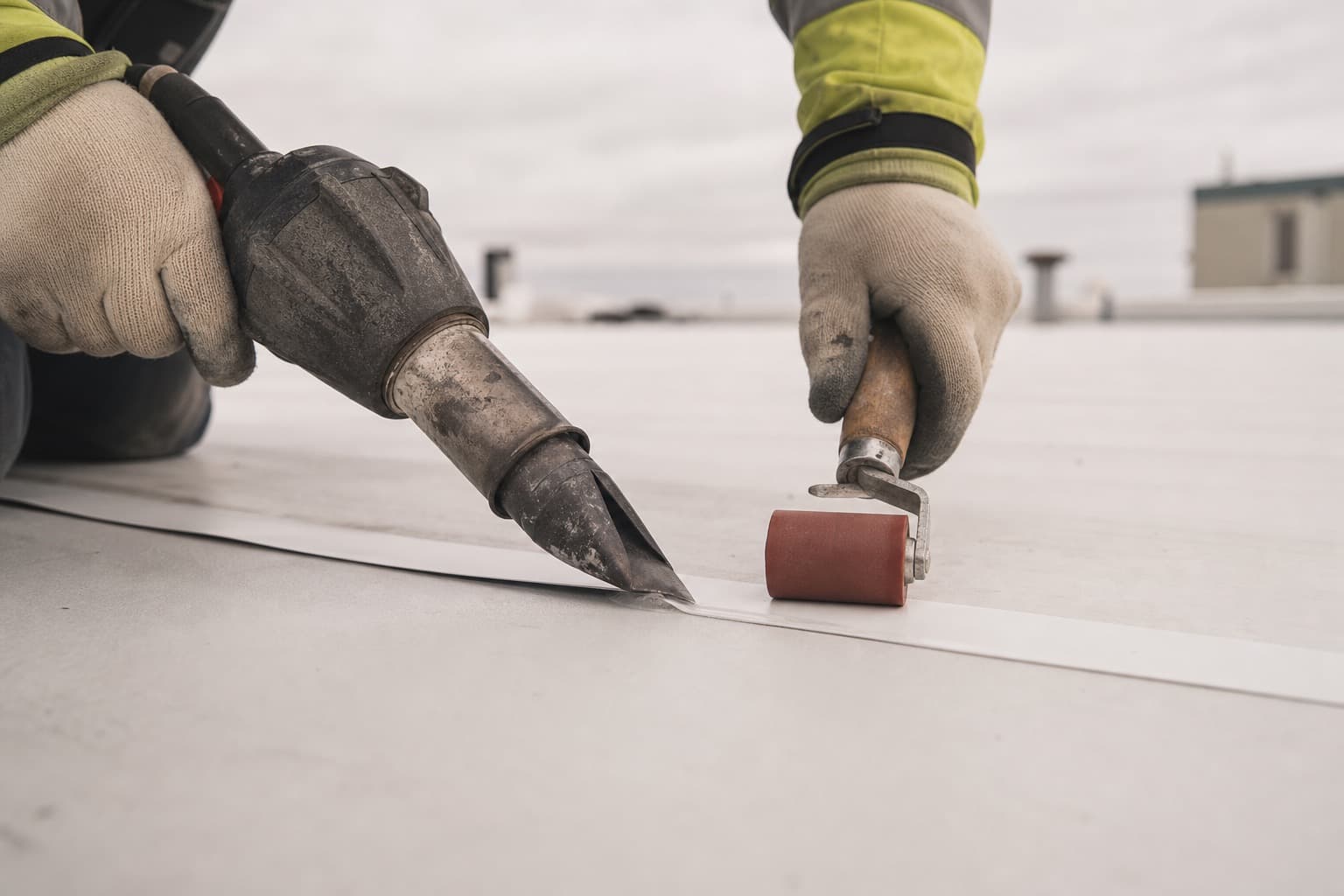
You keep the proof, not just the roof.
The job ends with a photo-driven closeout report — the before condition, the work in progress, and the finished assembly, captioned and filed. It's your building's reference record for warranty, resale, insurance, and the next facility manager who inherits the roof.
Let’s get on your roof and show you where it really stands.
A documented, no-obligation condition assessment — the honest starting point before any bid.