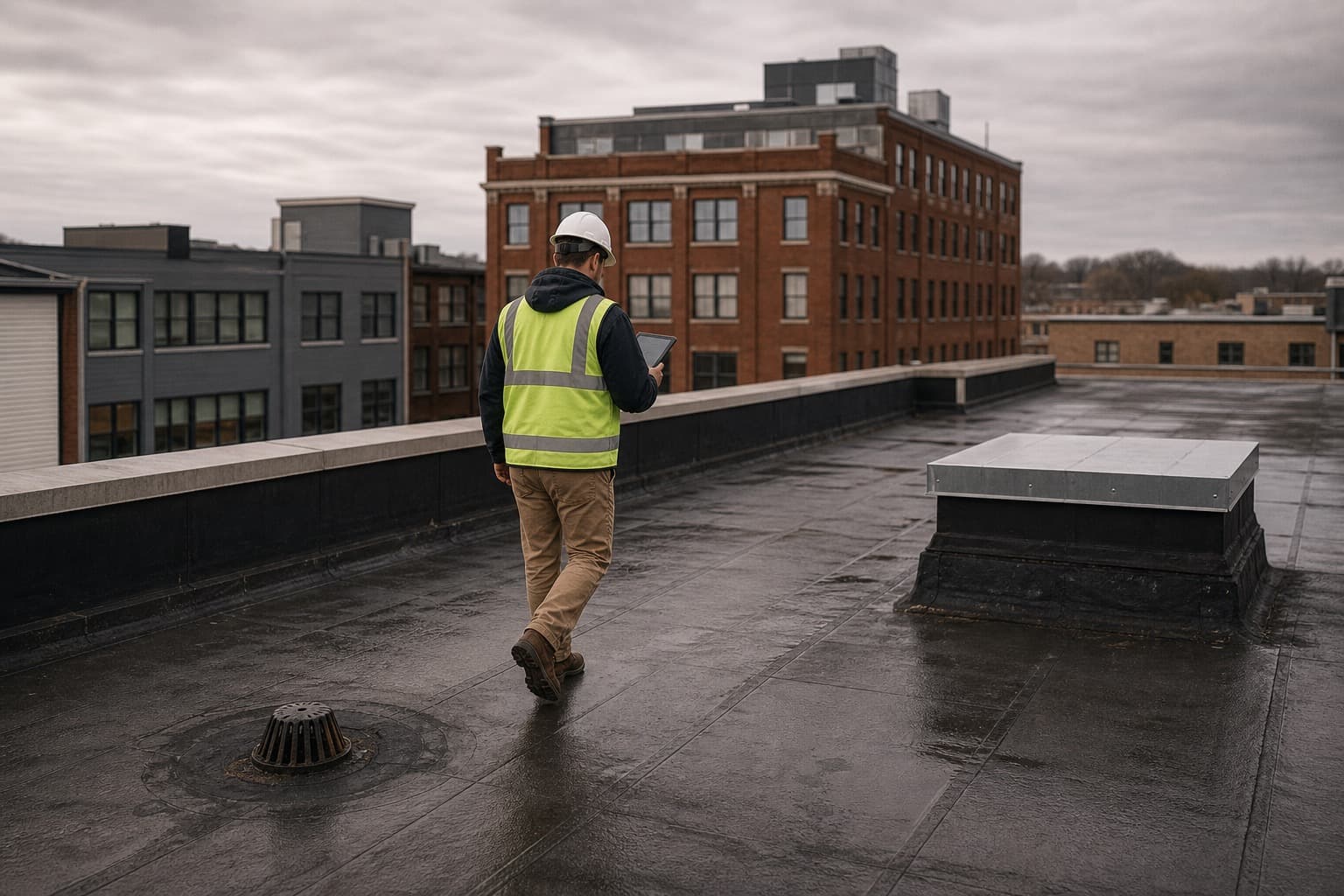
The process is the proof.
Eight steps take you from a first phone call to a documented record of your finished roof. It’s a consultative sequence built to earn your trust the only way that lasts — by showing you exactly what we find and every option in front of you.
Request a Roof WalkA diagnosis before a number.
A flat roof cannot be understood from the ground or from a satellite image. So the sequence starts on the roof with a camera, works through what the assembly is actually doing, and only then arrives at pricing — repair, recover, and replace, side by side.
A roof we talk you out of replacing this year is a relationship we keep for the next decade. That is the reason the process below looks the way it does.
From first call to a record you keep.
The same disciplined sequence runs on every job, whether it ends in a small repair or a full tear-off. Here is exactly what to expect, in order.
You reach out
A leak, a failing roof, a budget cycle, or a storm — you call the line or send the form. No pressure, no obligation, and no quote pushed before anyone has seen the roof.
We meet you on site
We come to the building. We don't bid roofs over the phone or off a satellite image — a flat roof can't be understood from the ground, and a number given without seeing it isn't worth much.
No phone-only bids.
The roof walk
We get on your roof with you and inspect it end to end — documenting every finding in photographs as we go. This is the walk that everything else is built on.
- Seams — the welds and laps where water finds its way in
- Drains and scuppers — whether water actually leaves the roof
- Flashings — the transitions at walls, curbs, and edges
- Penetrations — every pipe, vent, and unit that breaks the surface
A test cut, when needed
When the assembly underneath isn't clear from the surface, we take a small core sample to see exactly what's built up beneath the membrane — how many layers, what condition, whether the deck is sound. It's the difference between a guess and a diagnosis.
Only when the roof calls for it.
An options-based bid
You get repair, recover, and replace priced side by side — not a single take-it-or-leave-it number. Each option comes with the reasoning behind it: what it costs, what it buys you, and how many years it realistically adds.
The findings meeting
We sit down and walk the photos with you, explaining the trade-offs in plain language. The cheapest honest answer is often a repair or a maintenance plan — and when it is, that's what we tell you. We don't push the most expensive option.
This is the heart of how we work.
Execution
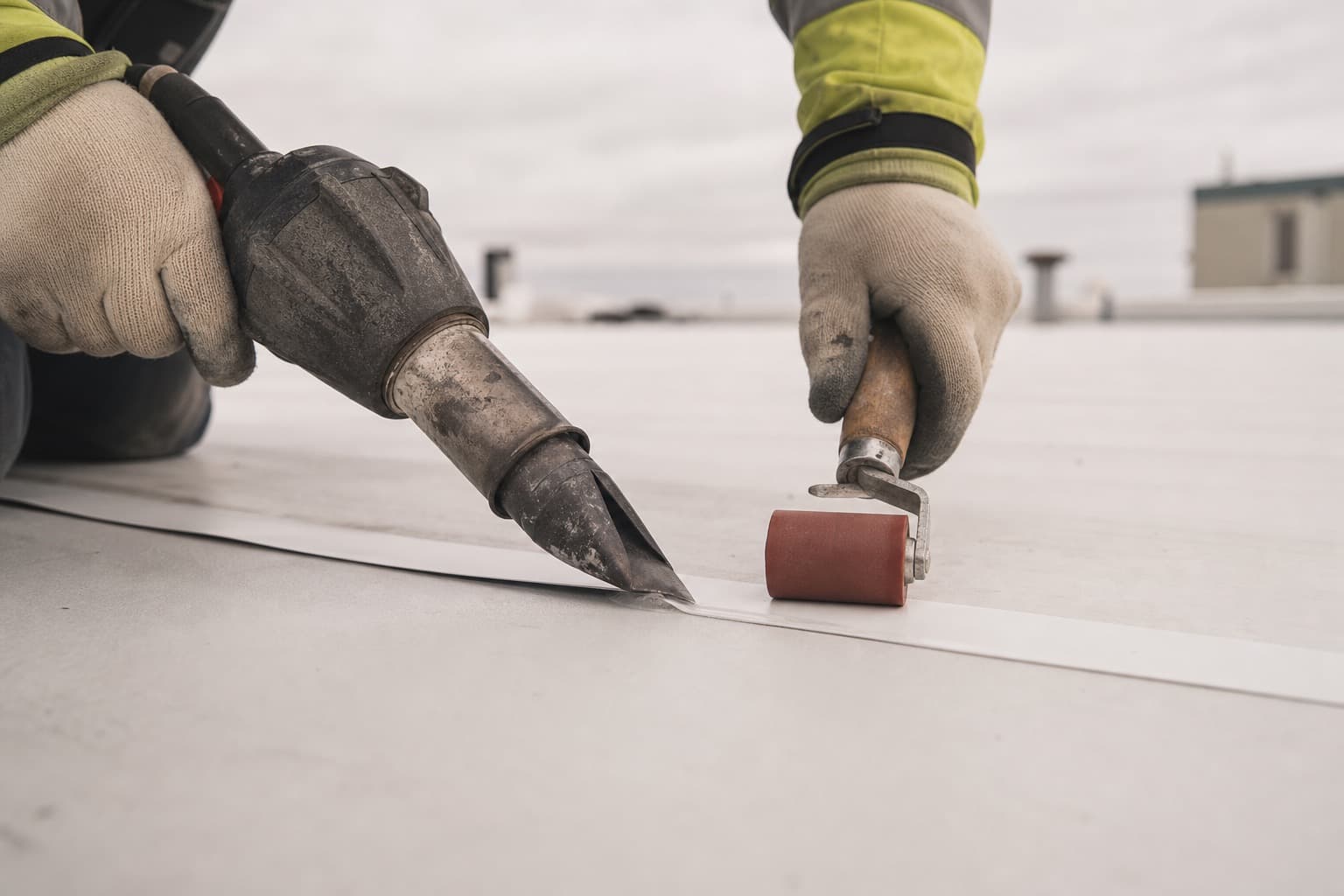
Once you've chosen a path, the crew works the plan — and documents progress in photographs the entire way through. You're never guessing what's happening on your roof or whether the detail under the membrane was done right.
A photo-documented closeout.
Every job ends with a photo-driven report of your finished roof — the before, the work in progress, and the completed system, captioned and organized. You keep it.
It becomes your building’s reference file: proof for an insurance claim, backup for a capital-planning conversation, and the first thing you hand the next facility manager who has to make a call about this roof.
See a sample closeout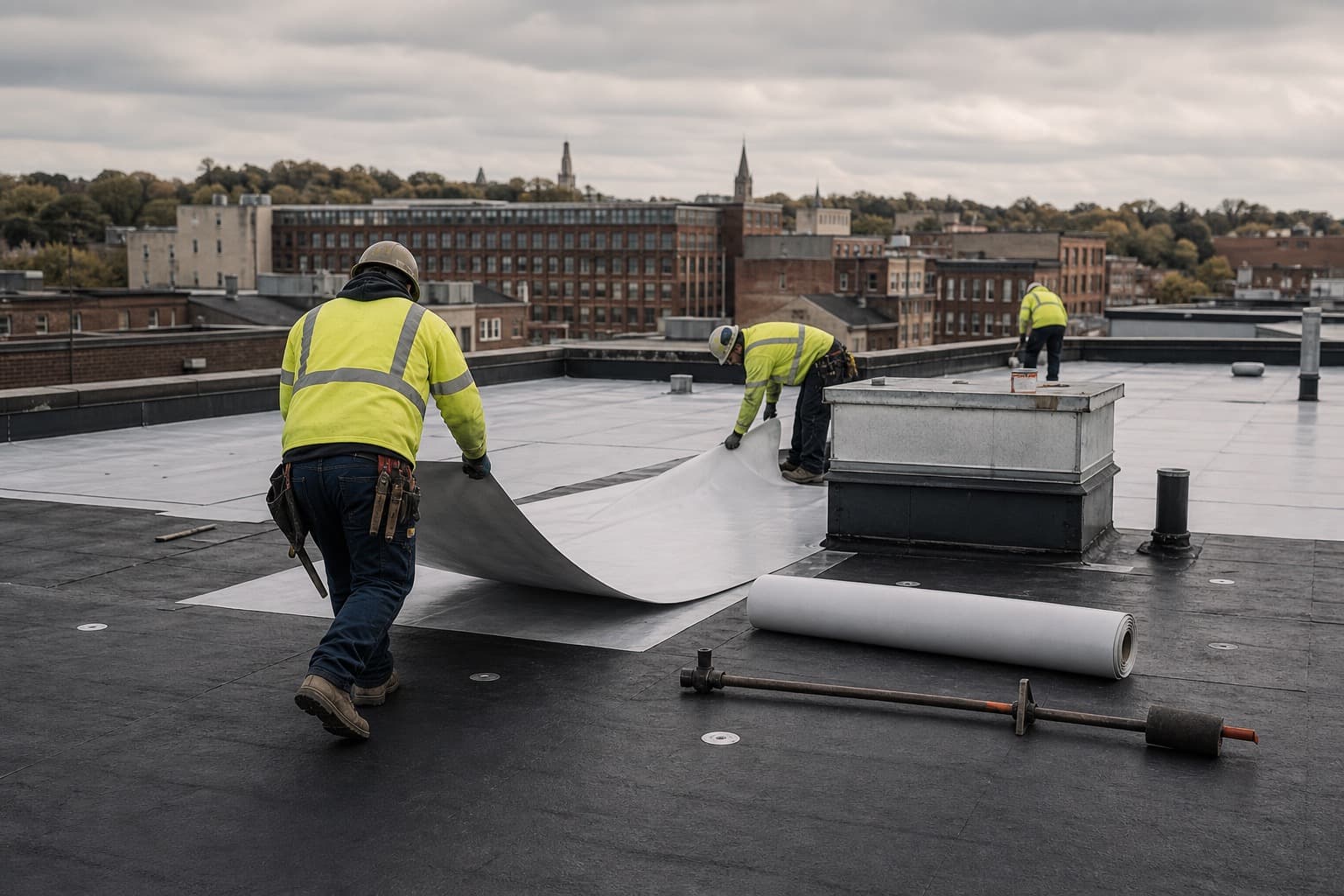
Why this process wins the roof.
You can check the recommendation against the roof.
Every finding is photographed, so the reasoning behind a repair or a replacement is something you can look at yourself rather than take on faith.
You see what each option actually buys.
Repair, recover, and replace priced side by side, each with the years it realistically adds. The decision stays yours, made with the full range in front of you.
You keep a record you can actually use.
The closeout package becomes your building's reference file — for insurance, for capital planning, and for the next person who has to make a call about this roof.
We work around the people under it.
A roof gets replaced once every few decades. The businesses and tenants beneath it open every morning. We plan the work around that reality — staging materials to keep entrances and parking clear, sequencing so occupied areas stay dry, and scheduling the disruptive phases when they land softest on the building.
For a restaurant, that can mean working off-hours so the kitchen never closes. For a multi-tenant plaza or an apartment building, it means tenants stay in place and informed. We’ll tell you up front what each day of work looks like from the ground — so there are no surprises for you or the people you answer to.
Want the specifics for your building type? See how we work across industries, or read more about our services.
Let’s get on your roof and show you where it really stands.
A documented, no-obligation condition assessment — the honest starting point before any bid.